Winner of the 2016 Poetry Vine Award for Canadian Jewish Literature.
“Enjoyable, readable, fresh.” – The Jury
In 1968 Isaac Bashevis Singer was asked by The Paris Review what he thought about the future of the novel. He was optimistic. But he did concede that poetry was in trouble. He actually went so far as to say that in the twentieth century poetry “became bad.” In his view poetry became bad because poets stopped caring whether their work was interesting or even possible to be understood.
Catullus’sS oldiers, my first collection of poems, was released by Cormorant Books in 2015. You’ll have to judge for yourself, but with the poems in the collection I’ve tried my best to be understood at least and, wherever possible, interesting…
From time to time I will post one of my new poems here.
March 1, 2026
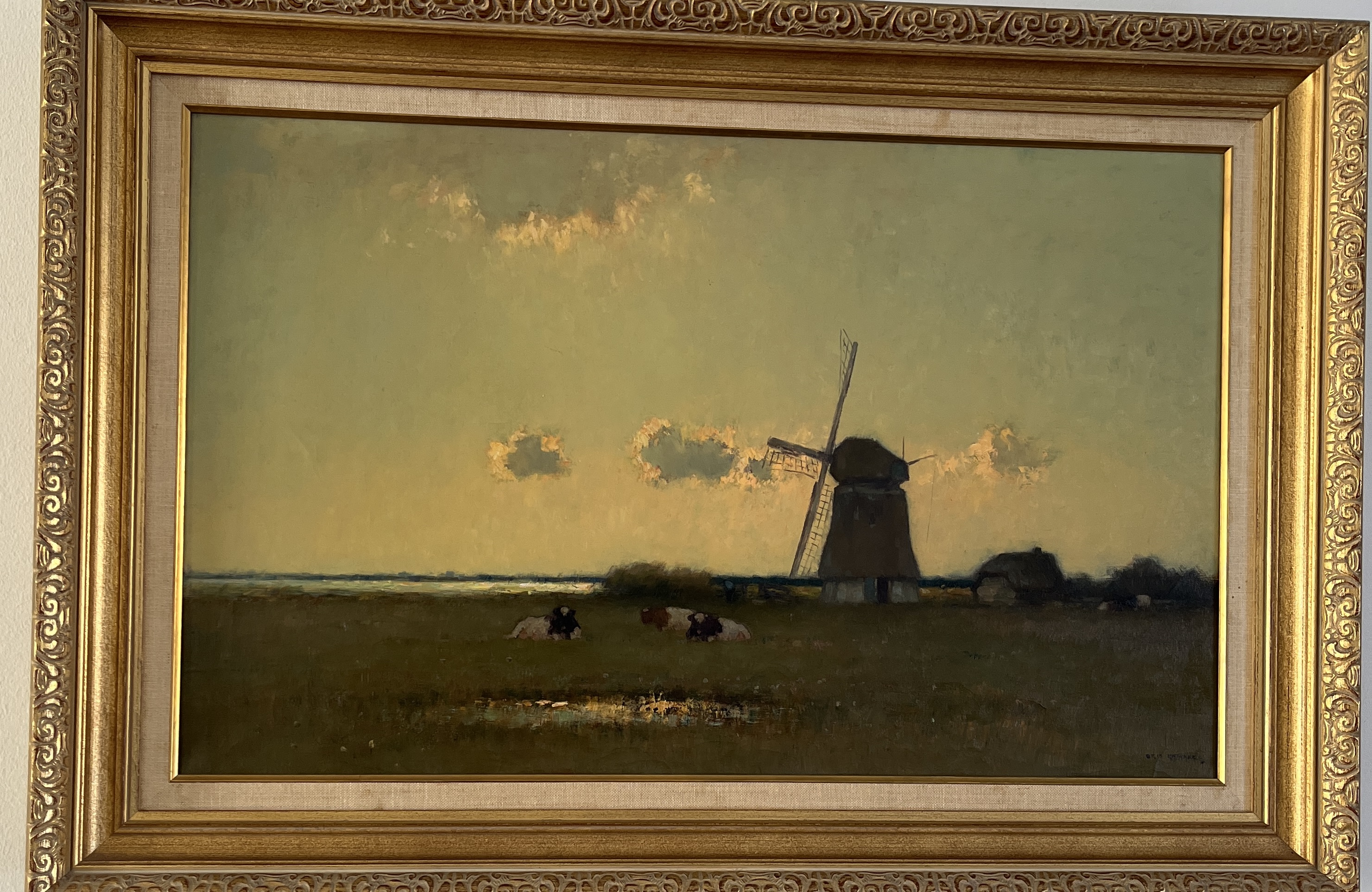
This one is a very light – or perhaps I mean very slight – poem but I thought it was amusing. It was inspired by something which I saw in one of my favourite paintings. Afterwards, I was unable to un-see it.
DUTCH LANDSCAPE

It is like a few paintings in our house:
antique, European, gold-painted frame,
unnamed artist, nineteenth-century
country scene. A flat green field,
windmill and cottage in the distance,
a low-lying lake or river to the left.
On its right bank sit barely discernible
buildings. Four small clouds lying low,
one large one at the top,
in that pale blue cloudy grey sky
European artists do so well.
In the foreground a small pond
with two black and white cows
lying placidly - aren't all cows placid -
behind it. One has a black splotch
on its middle, the other a black head.

One day I noticed the two cows
resemble eyes: the black splotches
their pupils, the rest of their bodies
the whites on either side.
The pond looks like a narrow mouth,
the green field a wide face.
It is the face of Oscar the Grouch
from Sesame Street. I loved Oscar’s
crazed pursuit of unhappiness
paired with his magical infinite trash can
where whales could swim for miles
and anything could happen.
Once I saw Oscar’s face
I couldn’t un-see it. Now
I feel like a fancy art connoisseur
who can see deeper meanings
hidden from the ordinary viewer.
December 20, 2023
As the year draws to a close and I count my blessings in a world where so many people are suffering, I am reminded of a poem I wrote earlier this year about a homeless couple I saw one early morning when I was taking a walk and stopped into my neighbourhood bank to use their ATM.
POETS’ CORNER

The homeless young couple sleeps
inside the bank’s glass doors
like the kings and queens
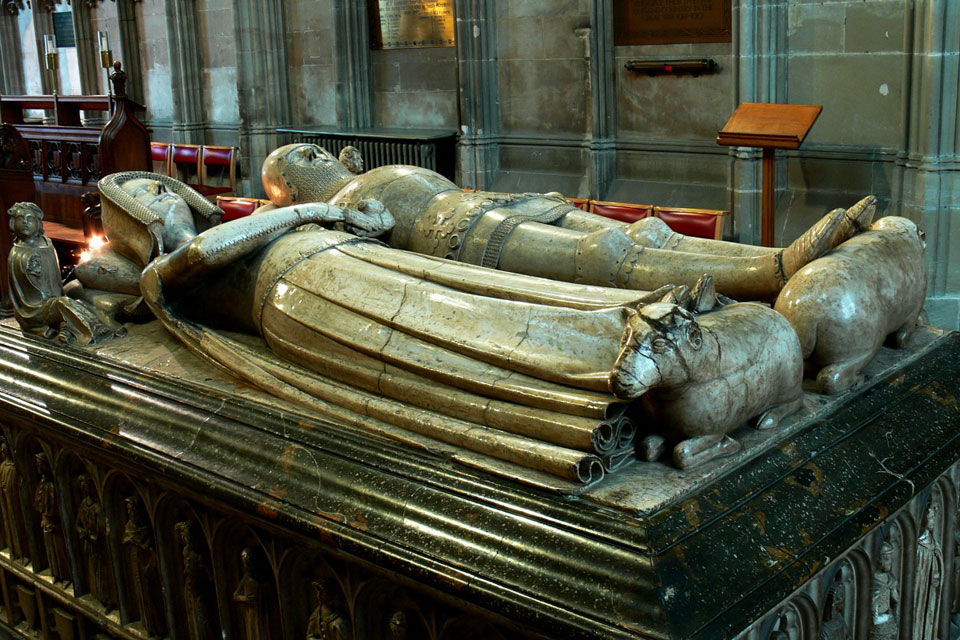
they used to carve on royal tombs.
They hold each other; couldn’t be
much closer. Skin translucent marble.
Heads small and delicate.
Black pants and t-shirts double
as fine velvet, hair short and wispy
after wigs and crowns discarded.
They look exhausted, as if
they’d spent days scheming
to conquer a neighbouring kingdom
or negotiating an advantageous match
with its rulers for their infant daughter.
But instead of their names and titles
in stone, they’ve chosen simple words
on cardboard, in black marker:
“Sorry for disturbing your ATM.
We needed a safe place to sleep
after a night on the streets.
Anything you can spare
would be appreciated.”
I drop a twenty-dollar bill in their bag
after my electronic barter.
They sleep now in their makeshift
Westminster Abbey like Byron or Chaucer.
February 24, 2023
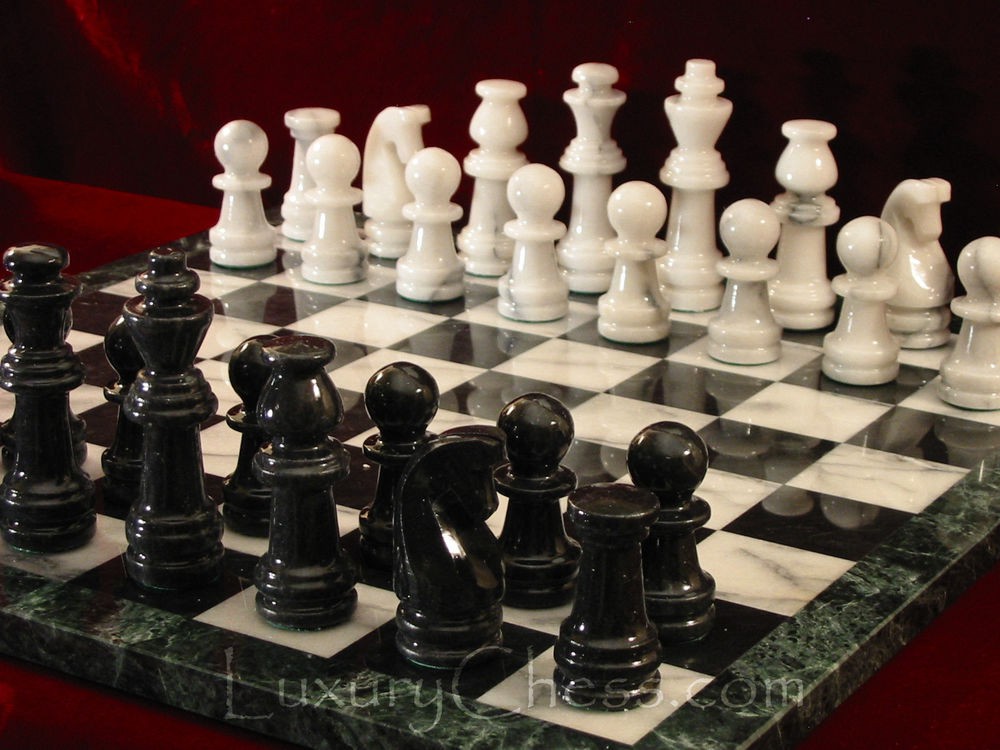
My father taught me how to play chess and I taught my children. There are of course many life lessons to teach and to learn though games. Here’s a poem I wrote about playing chess with my youngest son. Many thanks to Bywords.ca in which the poem first appeared.
MASTERCLASS
I am playing chess
with my youngest son.
I have not handicapped myself
with the absence of a rook or knight.
I float the idea, and my son
makes it clear it’s insulting.
So I beat him each time.
And each time
he puts up a valiant effort
because he is talented and brave.
Only once does he complain
that I don’t let him win more often.
When I ask him
if he’d like me to let him win
he huffs and says no way.
So I beat him again and again
even though he puts up a valiant effort
and has an innate talent.
I want to both manage expectations
and give him hope
so I tell him I will beat him
and beat him and beat him and beat him
again and again and then one day
he will beat me, as I beat my father
before him, and then he will go on
beating me at least half the time.
But for now he can’t help hating
losing, and when he cries,
putting away the pieces,
I share a hard-won lesson:
that he shouldn’t care
if he wins or loses
but should take pleasure in the game
and the people with whom he plays.
He nods and so I say no more.
I want to tell him
that we all lose in the end,
that life is a beautiful masterclass
in losing.
February 24, 2023
Exactly one year ago today, Russia invaded Ukraine. Here’s a poem I wrote about that invasion.

FEBRUARY 24, 2022

I

In Shakespeare’s world, the strong-jawed,
matter-of-fact, restorers of order,
are forever marching offstage,
always approaching too slowly,
never arriving in time –
Macduff, Fortinbras, Albany –
while the villains strut in the limelight
and the good obediently
spill their own blood at their feet.

II

In our garden of the Finzi-Continis
we’ve fashioned for ourselves
from our talents and lucky accidents –
broad backyard, gently blowing trees,
still pool filled with snow –
I made my peace long ago:
so, tuned out the battle trumpets
of truckers besieging Parliament,
while early this morning, on a faraway continent,
swirling home of ancestral mythology,
Putin invades Ukraine.
It’s the 1930s all over again
and cultured men and women
debate eloquently at the UN.

III

Weeks ago, I tore something
somewhere in my shoulder
shovelling heavy snow. I am that age
where everyday tasks are rife with risk
and past the turning point
where injuries heal on their own.
I’m not yet afraid of falling
but my wife bought me ice treads
last Christmas, and I, afraid for the world,
wake early this morning
and step into the darkness that surrounds us.
The iron spikes drive into the ice
and for the moment I am not slipping,
and in this suspended state I greet the dawn.

IV

We’ve forgotten how to speak to one another
as we mutter what passes for language
and gesture and stumble dumbly about
while history marches patiently on
in the distance, the same ancient drama
flickering on ever-smaller screens.
Everything gets better,
and everything still gets ruined, in the end.
July 2022
When I’m not reading my usual mix of literary fiction, poetry, and history, I like to relax with mysteries and thrillers. One writer I’ve enjoyed over the years is John Grisham. Here’s a poem inspired by finding a little surprise inside a book of his in one of the lovely Little Libraries that I pass on my morning walk in my neighbourhood. The poem is about the often hidden power of reading and writing.
HOMAGE TO JOHN GRISHAM: A PARTIALLY FOUND POEM

I feel like I’ve read as much about you
as I’ve read your books:
about your manners
as a Southern gentleman,
your courtly charm,
self-deprecating humour,
how when you were studying law
one of your profs commented
on one of your papers
that your legal analysis was not stellar
but perhaps you had a talent for fiction,
the way you wanted to be Faulkner
when you were young and starting out,
writing about the South
and capital punishment
about the fears and desires
that cause us to walk a certain path,
how you travelled the South,
selling books out of the trunk of your car
to independent bookstores
to anyone who would buy them
how you sold only a few hundred,
more than not a small number
of poets and novelists,
how your second book garnered
film rights of $600,000
before you landed an advance,
and the rest as they say,
is a certain kind of history.
You once mentioned how a wildly
successful popular novelist –
perhaps it was Stephen King –
said to be a commercial success
you had to write a book a year
and so you did.
I’ve read The Firm and The Pelican Brief
more than once.
Picked up that elusive first novel
for my father-in-law at a Little Library.
There have been times when my writing career
was not going well
and I dreamed of being like you:
read and known.
I remember my early career days
doing my teaching internship
and the other English teachers
whom I admired, relaxing in their
little English teachers’ room
after teaching Shakespeare or Hardy,
saying, “Boy that Grisham can tell a story,”
hard-earned praise from men
who could teach a poem
to the Grade 11 Baccalaureate class
like nobody’s business,
another commenting, “But yeah,
sometimes you can tell he’s just
thinking film script
and boy that ruins a novelist,
sometimes he just phones it in.”
Today, on my morning walk
in my neighbourhood
I find a novel of yours
from twenty years ago
at one of the Little Libraries,
the one with the light that goes
on whenever you open the door.
I’ve never heard of it before:
A Painted House.
Supposedly autobiographical,
about a boy growing up on a farm.
not a lawyer or grifter in sight.
No visible thrills. I skim through it,
ambivalent until I find
between pages 224 and 225
a child’s note to his or her parents
in purple pen on post-it note: Mommy & Daddy
Happy belated Valentine’s Day.
I love you – triple hearts – very much!
I am extremely sorry about yesterday!
It will never, I repeat, Never happen AGAIN.
I hope that you are not mad at me. Unhappy face.
Many XOs that continue
onto the back of the post-it note
and fill the little page.
I imagine this child grown up,
in their early thirties now, long-moved out,
perhaps young children of their own,
the parents cleaning out bookshelves,
seeing the book, forgetting about
the note hidden for safekeeping
or used as a bookmark,
and this particular Grisham
not doing it for them.
or simply wanting to pay it forward.
And because of this,
I have a newfound affection
for you, John Grisham,
one I will remember
long after I forget your books
and how much I once wanted
to be like you.
February 2022
This poem is part of a cycle I am working on in which I reimagine famous episodes from the Old Testament, often from the point of view of marginalized characters, often with an unusual twist on how the original story has come down to us. Many thanks are due to The Satirist where this poem first appeared.
SNAKE

I know, I know,
it’s the oldest defence in the book:
I was only following orders.
The shoddy rationale of every
garden-variety war criminal,
concentration camp commandant
or bookish man who only planned.
And in my case it’s a long shot;
but still, it’s true. He put it me up to it,
like a jealous older husband bent
on testing his young wife’s faithfulness
while she’s on a business trip,
hiring a handsome man to try
to pick her up in the hotel bar.
Told me it was just a harmless test.
He wanted to know if his daughter
was holding to her diet.
He had a vested interest in the health
of his future grandchildren, and all that.
In retrospect, it seems more than a little
weird. Well, actually control-freakish.
Weight-Watcher-in-Chief?
But at the time I didn’t question Him.
He created every one of us, after all.
I didn’t know He already harboured
us ill will, a fiery inbuilt brand
of jealousy. For Christ’s sake,
it was only a small piece of fruit!
How could I foresee the punishment
would be so wildly disproportionate?
Not just for the unlucky humans,
made to regret forever their weakness,
flung out of Eden, to go forward
always looking behind them
even from the start, and her kind
being set up for millennia of blame.
But oh my beautiful children!
Deformed to slither across the ground,
unloved, despised, all because of Him,
playing out a solipsistic trick
like some fusty, unlived, sadistic
British public school examiner:
prematurely old and loveless,
jealously robbing us of joy
December 2021
I wrote this poem after thinking about how it feels to be 51 years old. In the poem I draw a parallel with that mythical Area 51 and marvel at how life is such a mysterious journey . . . toward oneself.
AREA 51

It’s my first time visiting, and not easy to reach.
I’ve spent a lifetime trekking here,
a half-century at least. I find myself looking back
on the rest of my life, now that it’s more
than half over. With this birthday, time speeds up.
Certain things are more clear. Others less so.
The air is thinner. The body reacts differently.
This place makes you satisfied with mystery.
What you have learned on the journey makes up
for what you now know you will never know.
You realize you don’t need to know,
that the pleasure lies in not knowing.
You realize that the only alien is yourself
and he comes in peace.
August 2021
I wrote this poem after reading Harrison Salisbury’s classic work of history The 900 Days: The Siege of Leningrad. Salisbury takes you into the lives of the Leningraders: soldiers, Party officials, scholars, street-sweepers, writers and artists. The story is a double tragedy. The brave Leningraders faced as much if not more mortal danger from their own national leaders as from the besieging Nazis. Through it all, they kept on living and writing music and poems and novels.
ACCIDENTS OF FATE

I might have, could have
been a great poet,
if only I’d been born
in another time, another place.
Perhaps Communist Russia,
that would have been nice,
or one of the Eastern Bloc countries.
It doesn’t matter where as long
as it was under the totalitarian thumb.
I could have written in a cold flat,
shielded for a moment from the gaze
of the enthusiastic party censors
or in the Gulag on toilet paper
or only within the tattered fibres of my mind.
I could have written of knocks
on doors in the middle of the night,
of the husband’s eternal longing for his wife.
I could have been sentimental
and histrionic. I could have given
irony a wide berth.
And as they pulled out
my fingernails, I could have
shouted out my verse,
could have flung it in the face
of my torturers.
Here’s a poem that inspired the title of my first poetry collection:
CATULLUS IN A MARTIAL MOMENT

 Caesar has his legions
 to move this way and that,
 to cross the Rubicon or not,

 to live and die at his imperious word.
 For this Caesar shall be remembered
 when he is gone.

 But my army is greater in number,
 and of infinite formation.
 I tell them when to come and when to go.

 They march to a cadence of my choosing,
 across the page like a wave of soldier ants
 and set up camp in the country of a foreign mind.

 When all of Caesar’s soldiers have fallen
 and lie mingled with the marble ruins of his desires,
 or are pensioned off to farms of forgetfulness,

 when his colonies have rebelled or been conquered
 by barbarians whose time has come
 and no more tribute is forthcoming,

 my soldiers will still be winning over
 a different people in a world
 I cannot even begin to imagine.
And here’s another one from the collection:
THE BUTTERFLY

 The swimmers laugh and splash each other
 in the clear shallows. Further out
 men fish. In the shipping channel a freighter
 slides by with surprising silence. The swimmers
 soon feel the ripples. On shore a Monarch
 butterfly lies flat on a stone. Its wings
 do not look broken. Its body is intact.
 It is still and looks asleep. I have never seen
 a Monarch butterfly so still. I have never
 really seen the patterns on its wings.
 When I touch a wing it barely flutters
 under my fingertips. The colours, gold,
 black, amber, become clearer to me
 as everything around it – swimmers,
 river, freighter, sky – keeps moving. It looks
 like an expensive hand-sewn silk scarf or tie,
 or the Indonesian shirt my late father
 bought once. Since it can no longer fly,
 it lies in the sun and waits.
Another of my poems, “The Threatened Swan”, named for the painting that inspired it, the same one that is featured in the photo on my homepage, appeared in The Ekphrastic Review, a journal devoted to poems about works of art.
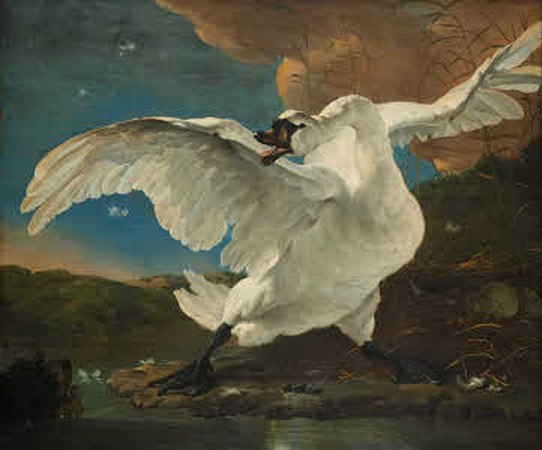
The Threatened Swan
Neither Zeus nor Leda figure here:
no pregnant pause before the action,
no rape, no god, no naked woman.
Any political interpretations
are only later stencilled in:
an urge to spell out meaning
and no chivalry toward history.
This is no more, no less than a mute swan
delivering her young from an unseen villain.
You can’t read enough love or hate
into her hoarse scream and depthless eye.
Her heavy wings like two swords beat
against feathered breastplate,
beneath twilight sky and smoky cloud;
webbed black feet set wide apart
on the muddy edge. The stream
not stopping for a moment for anything
so common as a mother’s instinct.
No gods or humans mar the scene.
 Daniel Goodwin