Professional athletes operate at the highest levels of competition, where they have to be at least just a little better than those they are playing against day after day. Unlike an athlete, a book is always in competition and in interaction with not just the books of its day but every book that has ever been written in its language or national literature, and increasingly beyond. How well a book both follows its existing tradition and challenges it or remakes it for its particular time as it competes and interacts with every other book usually provides a good sense of what its author is trying to do.
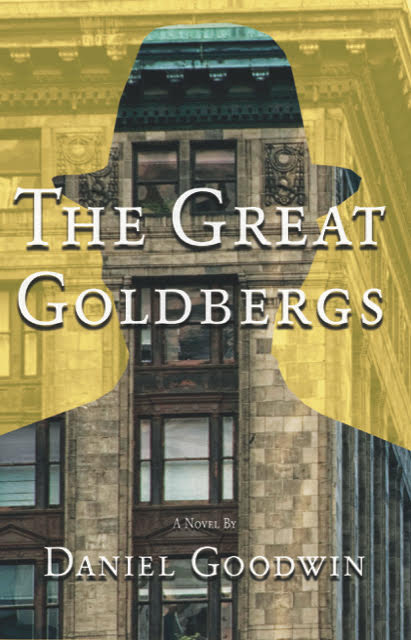
My new novel The Great Goldbergs had six influences: King Lear; The Great Gatsby, The Old Testament, The Firm, The Godfather, and Brideshead Revisited.
After being inspired by stories of my grandfather, I originally conceived of The Great Goldbergs as a retelling of King Lear but in a modern corporate setting. Instead of a doddering king who gives away his kingdom to his two duplicitous daughters while disowning the only one who truly loves him, I wanted to write about an aging and naïve founder and CEO dividing up his corporate empire amongst his three children, two grasping and evil with silver tongues, and one loving and true. I wrote what I thought was the first chapter in which the corporate patriarch summons his sons to see who loves him the most.
But after that, as I continued down the path I’d set for myself – and what follows is an excuse writers often lean on both to explain the inexplicable elements of our craft and to maintain a certain humility about what we do – the characters weren’t having any of that. None of the sons was anywhere as evil as Goneril and Regan. In fact, they were good, each in their own way. It was the father who was destructive and reluctant to relinquish his power, and there was an unmistakable element of sibling rivalry: not amongst the sons but amongst their father and his brother. All this called to mind for me the Greek myth of the god Cronos devouring his sons and the deadly conflict between brothers that forms such a powerful theme in the Bible, almost from the very beginning.
I knew that The Great Gatsby was going to be an influence early on. In The Great Goldbergs, as in The Great Gatsby, a passive but complicit or implicated outsider narrator is ushered into an unfamiliar world of wealth and power. Sean McFall, an Irish kid from a working-class family, serves as the lens through which the reader views the hero or anti-hero of the book, which in The Great Goldbergs’ case is not just the one character of Saul Goldber but the multi-faceted Goldberg family that rose up from anonymity to build a corporate empire.
I also knew I was being influenced by The Old Testament, writing about a Jewish family with biblical names, with echoes of the relationship between David and Jonathan in the Bible, now Sean, but inverted in terms of David being the son of the crazy king. Sibling rivalry, struggle within families, and some – I like to think – Old Testament King James Version cadences.
Funnily enough I was also intrigued by two popular novels. One was John Grisham’s The Firm in which a young lawyer joins a firm because they offer him a lot of money but then when he’s on the inside, he realizes it’s controlled by the mob and tries to escape. Sean becomes a lawyer and joins Goldberg Limited, there is no mob, but there is a sense of being trapped by the destructive but also attractive force in the son of the founder and current patriarch. Because The Great Goldbergs is not a thriller, Sean is not trapped by a fear of getting killed by anyone but trapped by his fear of missing out on wealth and power and abandoning his friend, not to mention losing his soul.
Which brings me to the other popular novel that influenced me: The Godfather by Mario Puzo. I wanted the Goldbergs to be a story of a strong-willed patriarch and his family. I thought about using as an epigraph the quote from Don Corleone where he says that a man who is not a father to his children is not a real man because Saul Goldberg’s misguided love for his children turns to dominance and abuse. Then there is the Godfather’s narrative of moving from good to evil… here in the Great Goldbergs there is a trend in that direction but probably more in reverse.
Finally, the last influence was an influence even before I read it: Brideshead Revisited. The story of a boy who falls in love with an aristocratic family and their charming, seemingly damned son. But of course, Evelyn Waugh’s novel is ultimately about grace. I read it for the first time when I was working through the final pages of the Goldbergs and wondering how to end it. My editor Marc Cote suggested I read it because everyone in it is flailing away and then they suddenly find God in the final pages. It was then that I realized I was writing about the soul too: in the Goldbergs’s case, about the secular battle we go through to preserve our souls in the face of the temptations of money and power.
Thanks to the readers, reviewers, and prize juries who have picked up on these influences in various ways.

 Daniel Goodwin